
Van Project - Ready for Departure
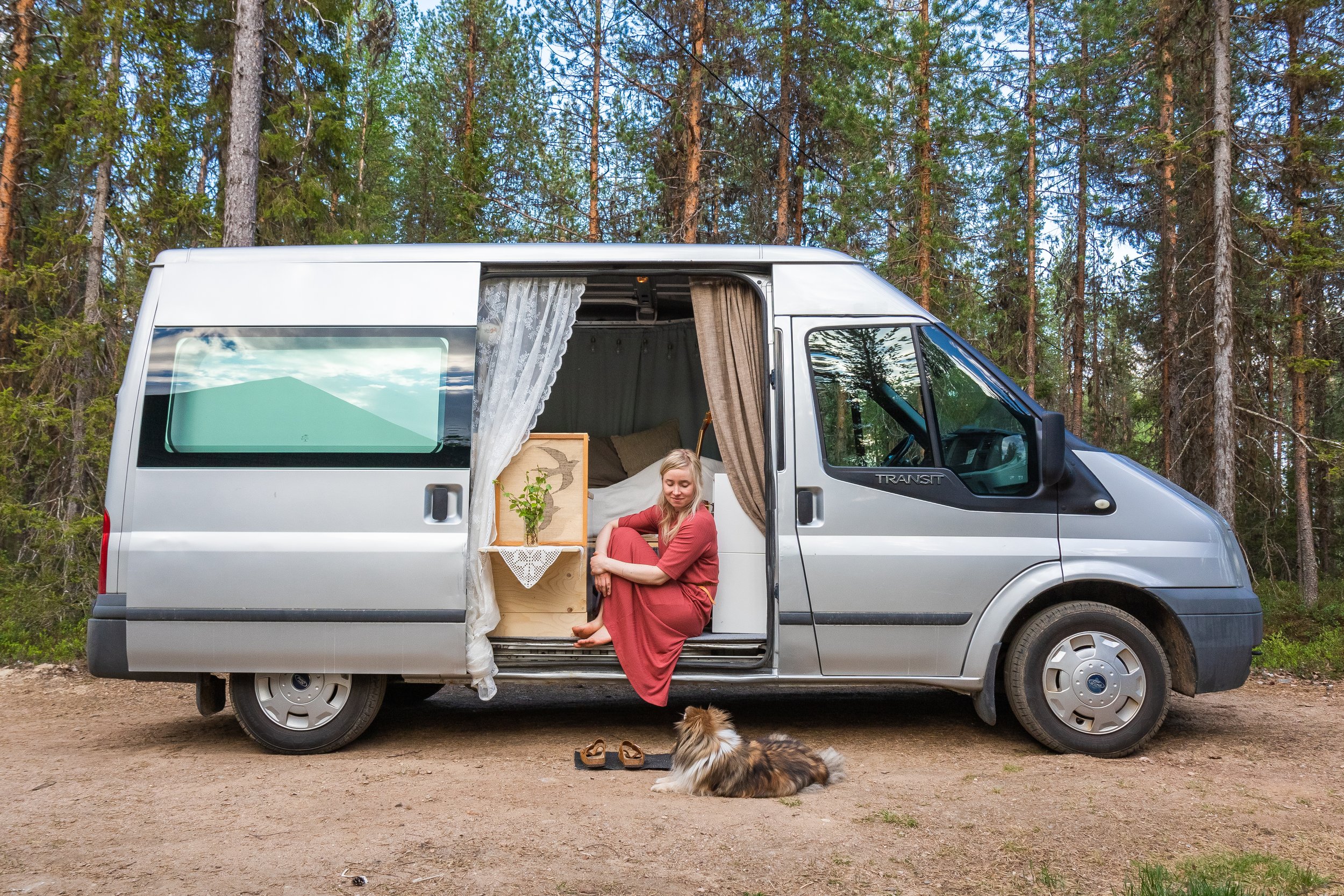
It feels like I’ve become car-, construction-, and tool-centered lately in my life, this blog, and everything else. The evenings have stretched long, and as I crawl into bed, the noise of the handsaw echoes in my head, and the dust from sanding tickles my nose.
But you know what? It has all been worth it becausethe Bertta van project is finally complete!
Bertta, Papu, and I are ready for departure.
This week, I’ve been busier than ever, if that was even possible. I finished the last pieces of furniture, added hooks, tightened screws, and pondered how to secure everything inside the van so that I can drive the winding sandy roads of the north without worrying about my belongings flying at me.
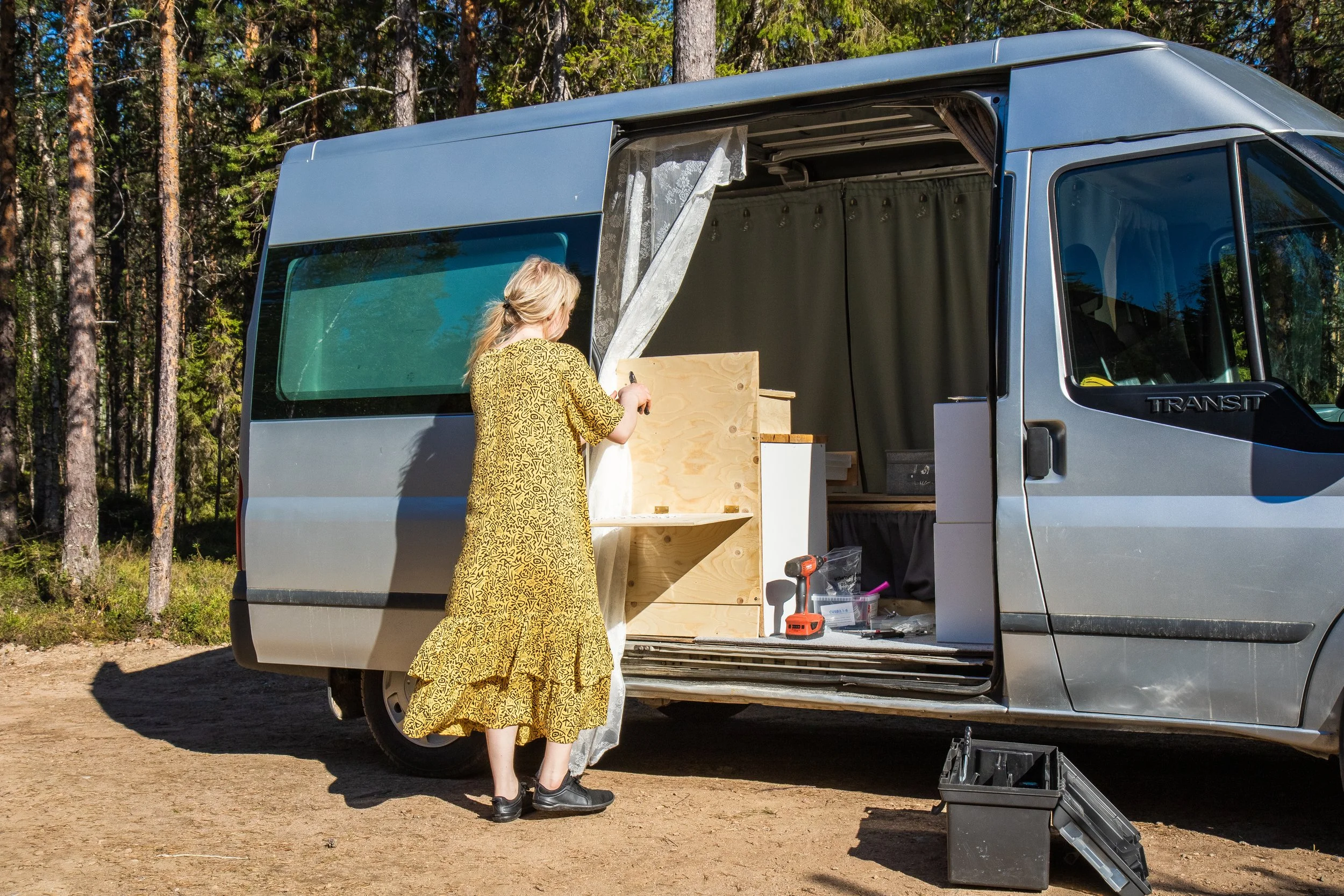
All the furniture is secured with tie-down straps to the thick metal rings that are already installed in the van’s floor. Just the process of securing everything took an entire evening. I think I’ll still notice various fastening needs while traveling, but I can fix those on the road.
The night before last—while Lapland was basking in an astonishingly warm air mass—I packed all my things into the van. I took everything essential, but nothing extra:
Camping gear (tent, hammock, sleeping gear, and camping stove equipment)
Camera equipment
Musical instruments (guitar and a few blank notebooks in case inspiration strikes while on the road)
Kitchen supplies (dishes, basic food supplies, and dishwashing supplies)
Clothes and shoes
Papu's belongings
Basic hygiene items (ecological soap that I can use to wash myself, my clothes, and Papu) + a couple of buckets for carrying water
Tools, tie-down straps, and vehicle supplies (electrical cables, jumper cables, a shovel, etc.)
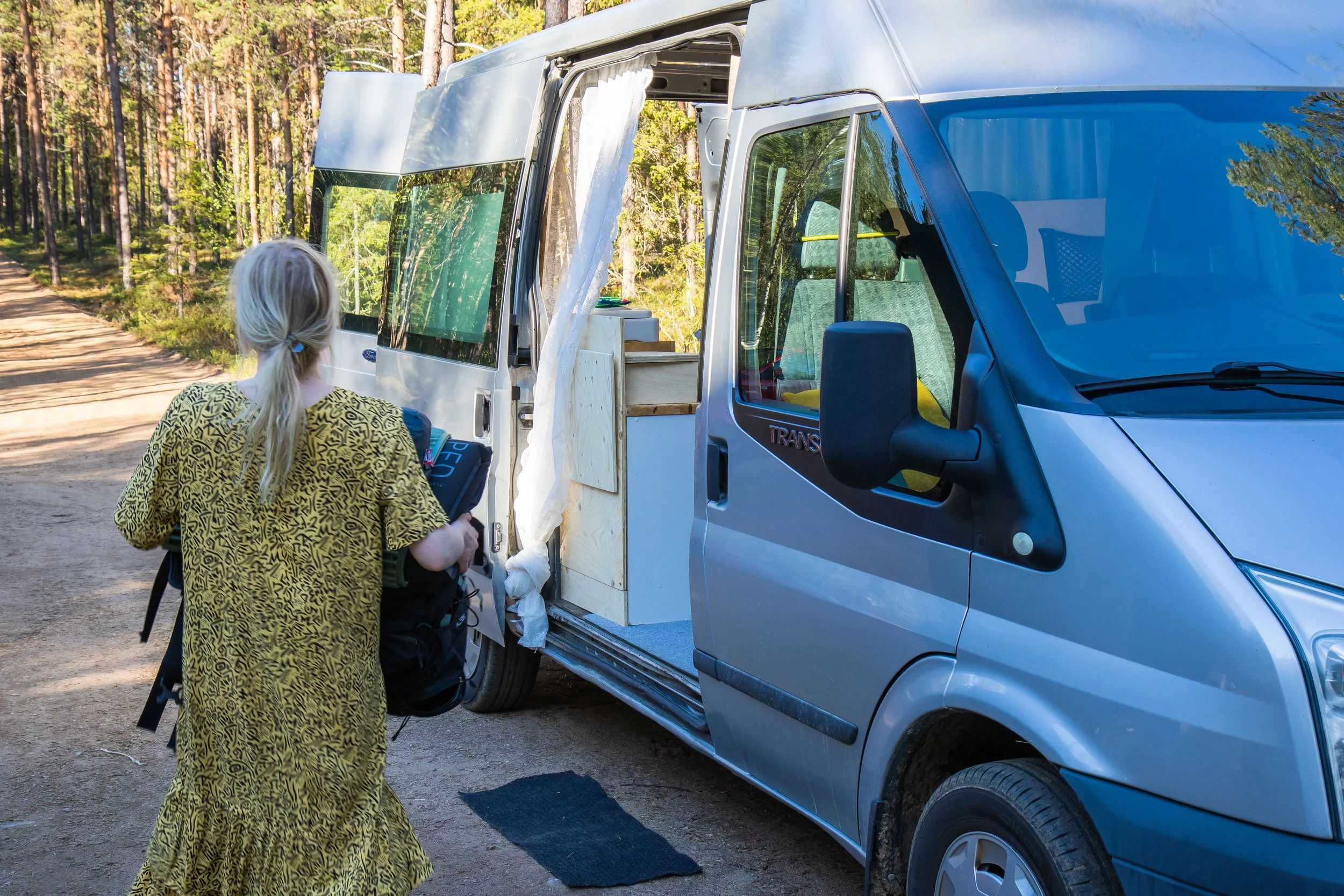
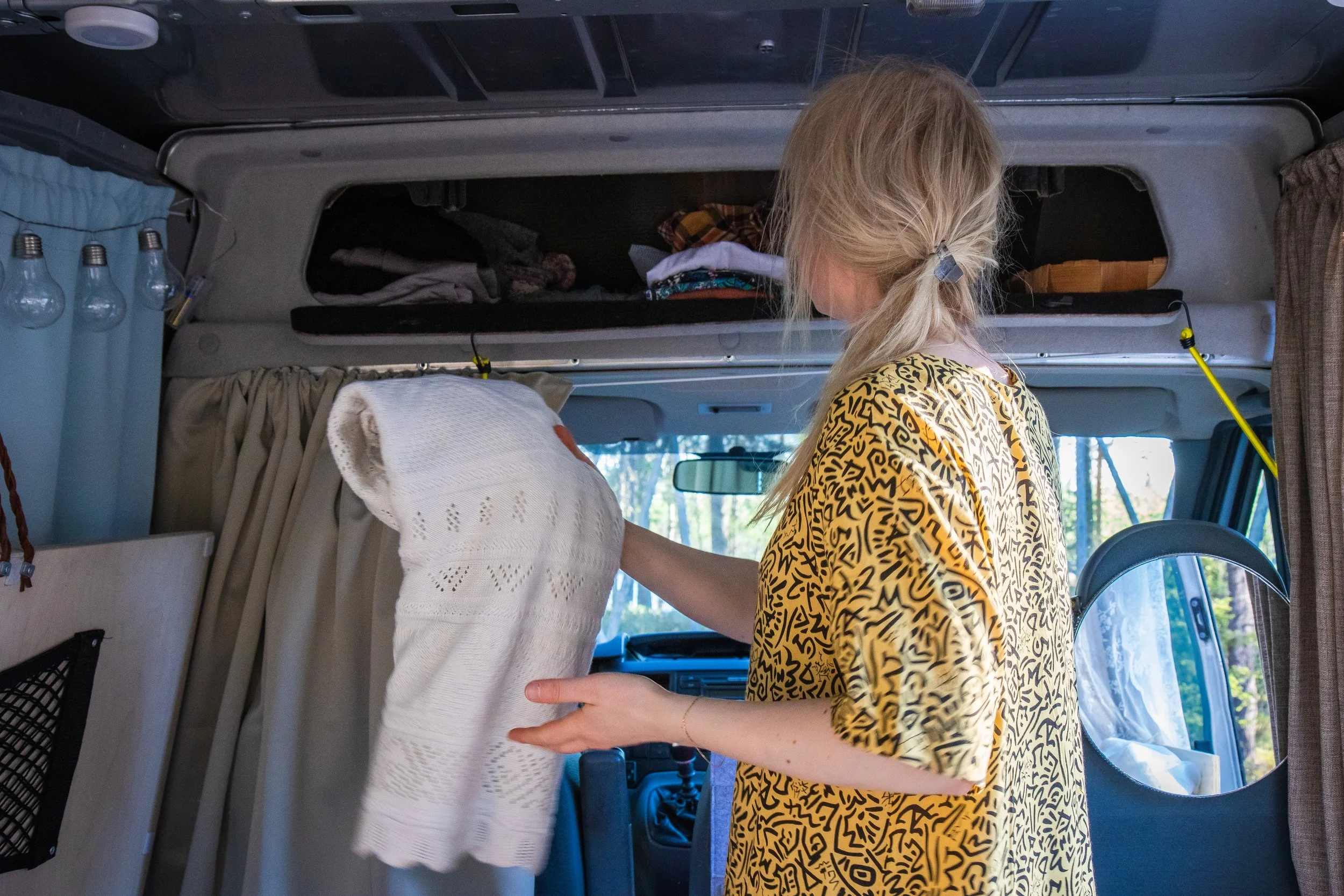
Above the driver's cabin (I wonder what it’s actually called?), there’s a handy and surprisingly spacious storage area where I managed to fit all the clothes I’ll need for the next few months quite comfortably. Since you can never predict the weather in the north, I’ve packed both summer dresses and wool sweaters along with beanies—my basic style staples.
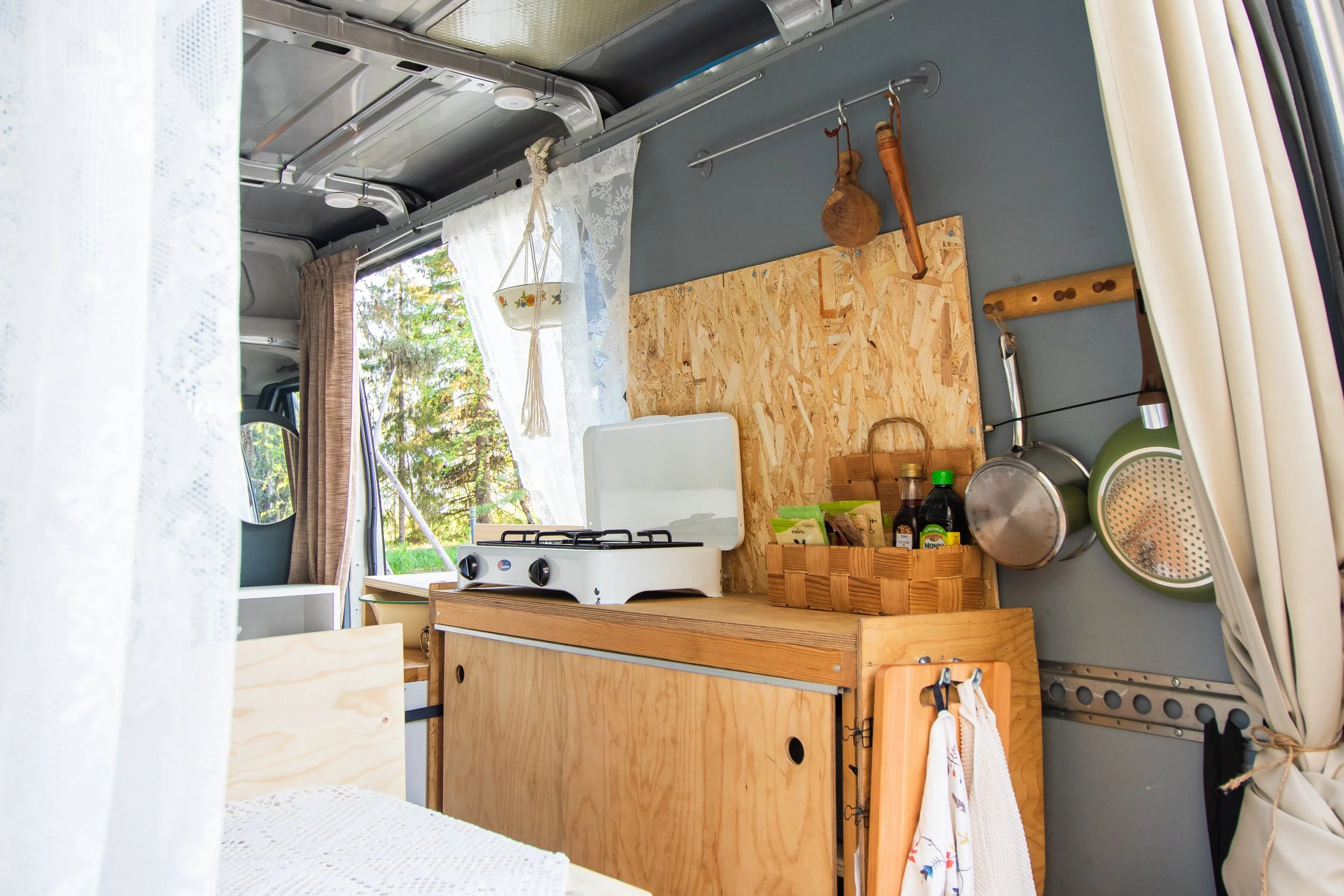
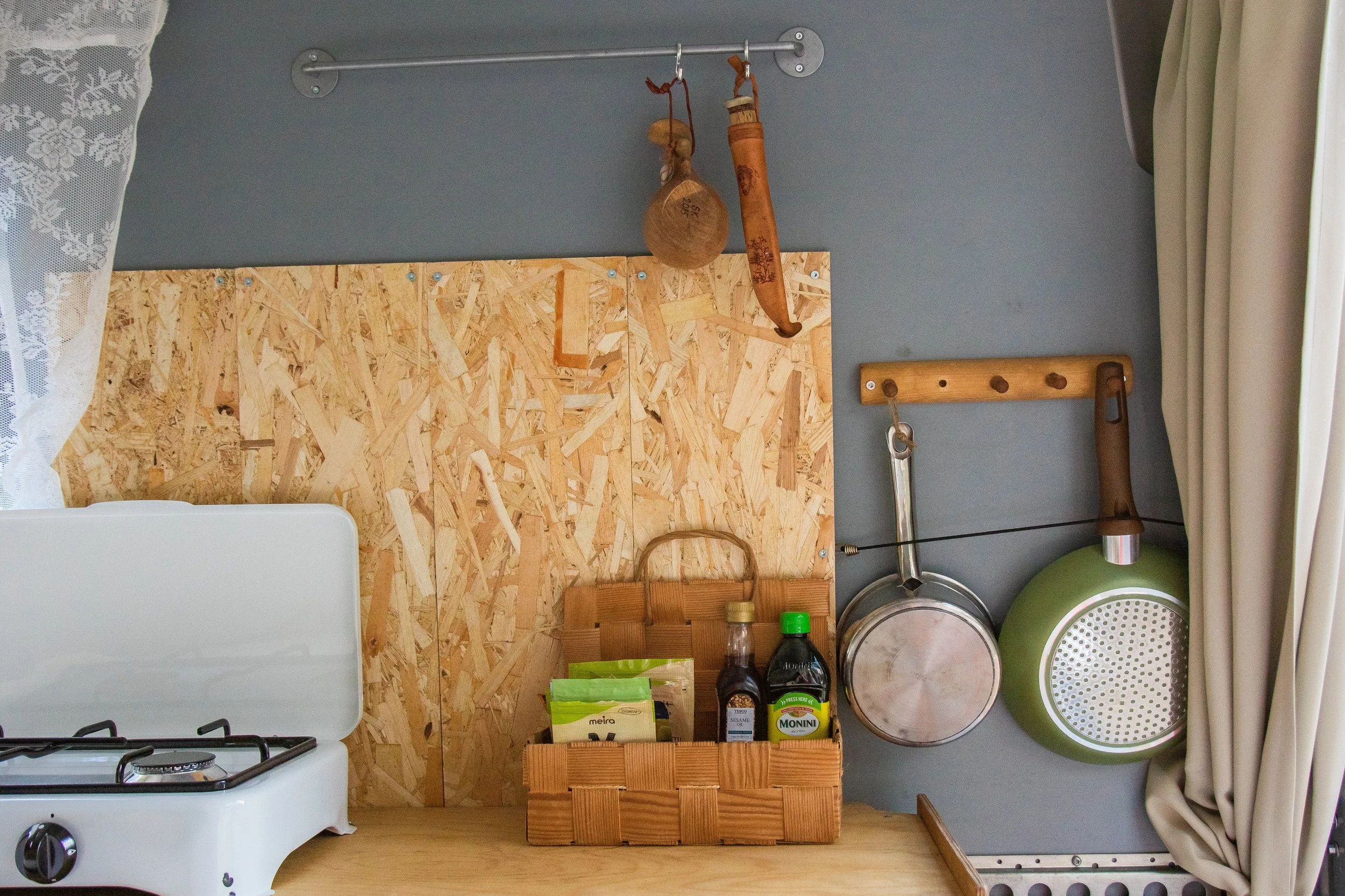
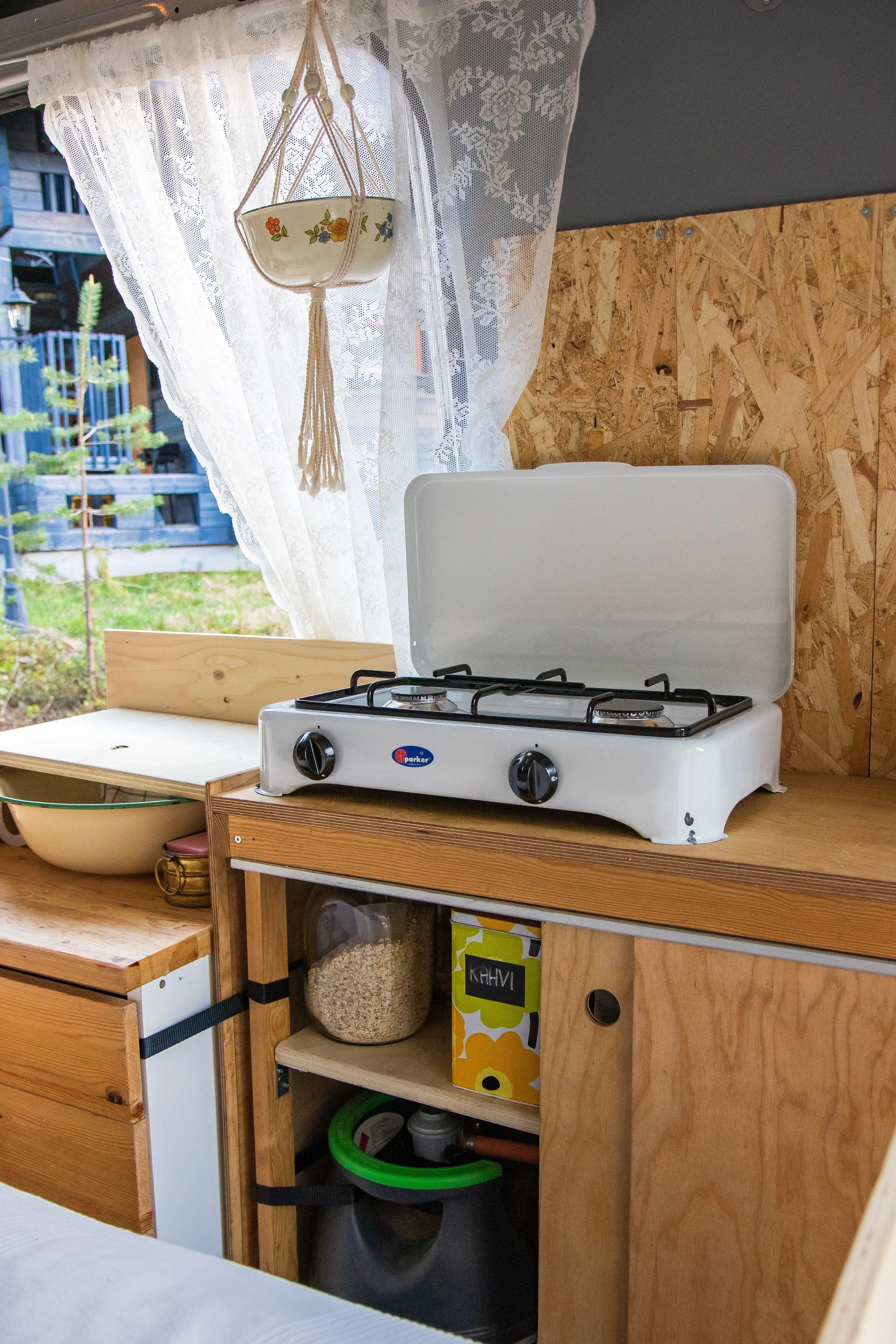
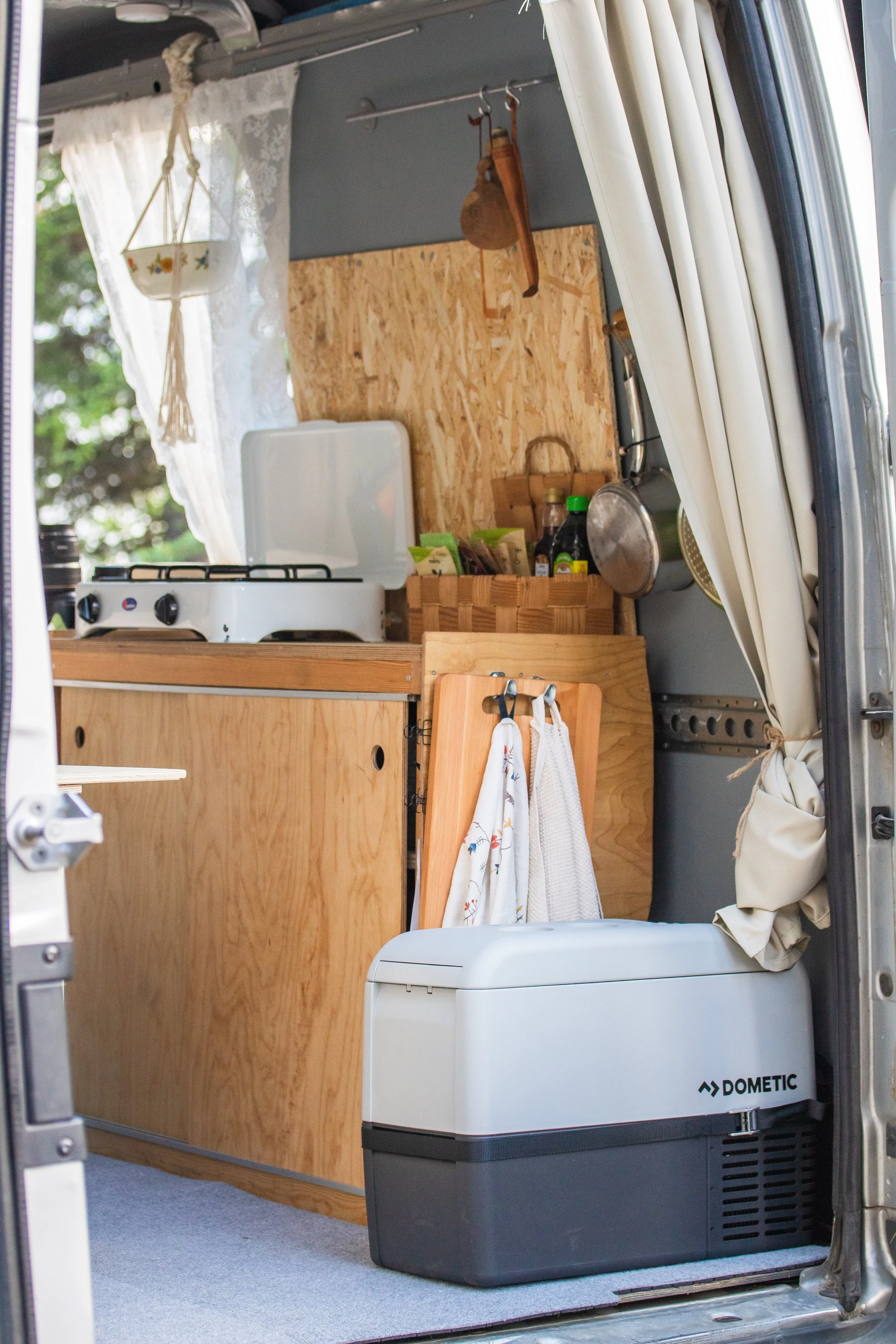
The van’s kitchen features a gas stove with two pots and a kitchen cabinet that hides all the dishes, some food items, a trash can, dishwashing supplies, and a gas bottle. Everything is securely tucked behind sturdy sliding wooden doors, so nothing can fly out of the cabinet while driving.
The water point is next to the kitchen cabinet and operates simply and manually. When I’m at the site, I place a large 20-liter water container with a tap on top of a wooden surface. An old enamel basin serves as the kitchen sink, fitting snugly under the countertop. When I need the sink, I pull it out from underneath the surface, empty it after use, and slide it back into place.
Next to the kitchen cabinet, at the back of the van, there’s a small refrigerator. It’s designed for RVs and consumes very little electricity, and so far, it’s proven to be excellent. This was the biggest investment in the project, costing almost €500, but while traveling throughout the summer, I want to keep my food and drinks cold.
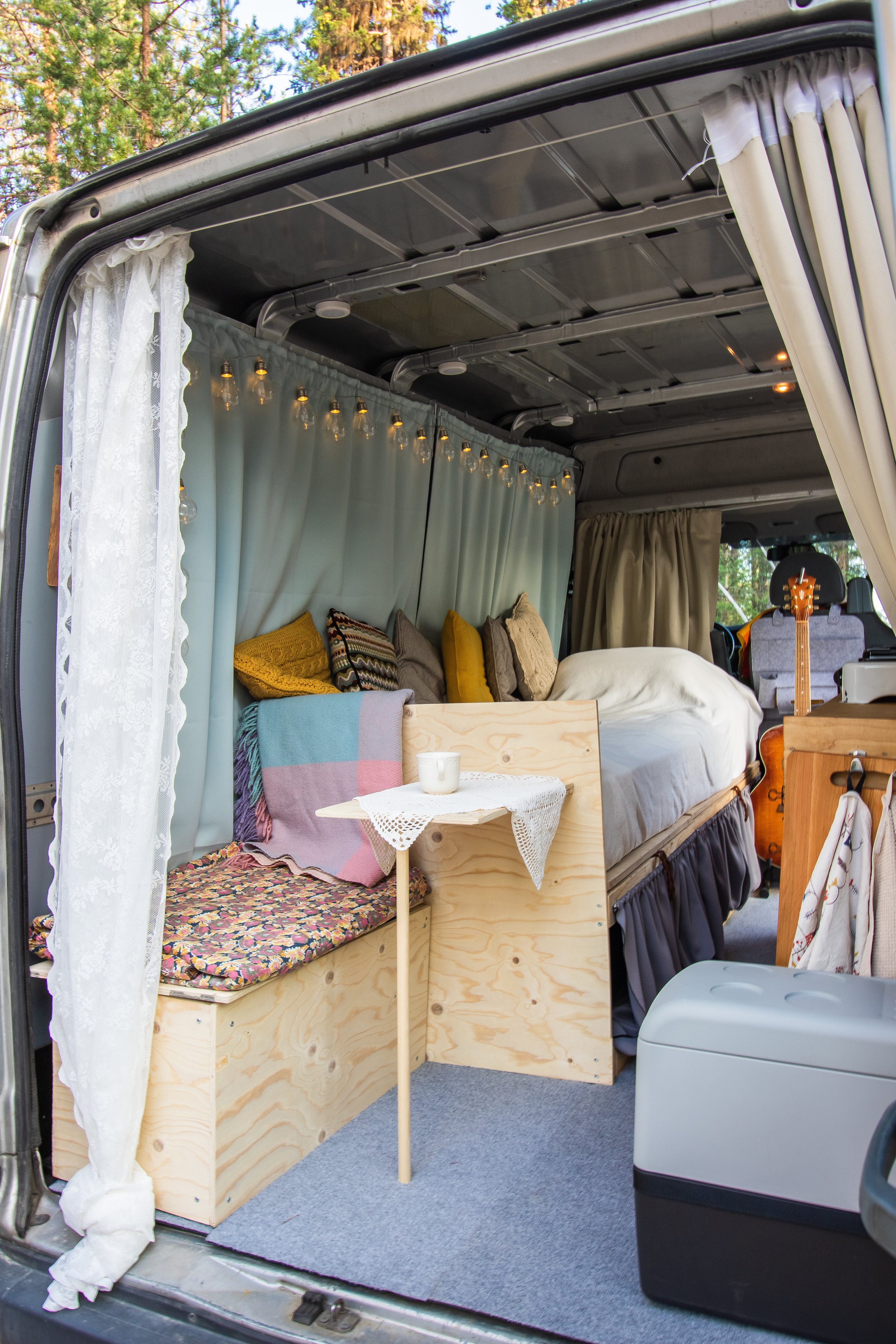
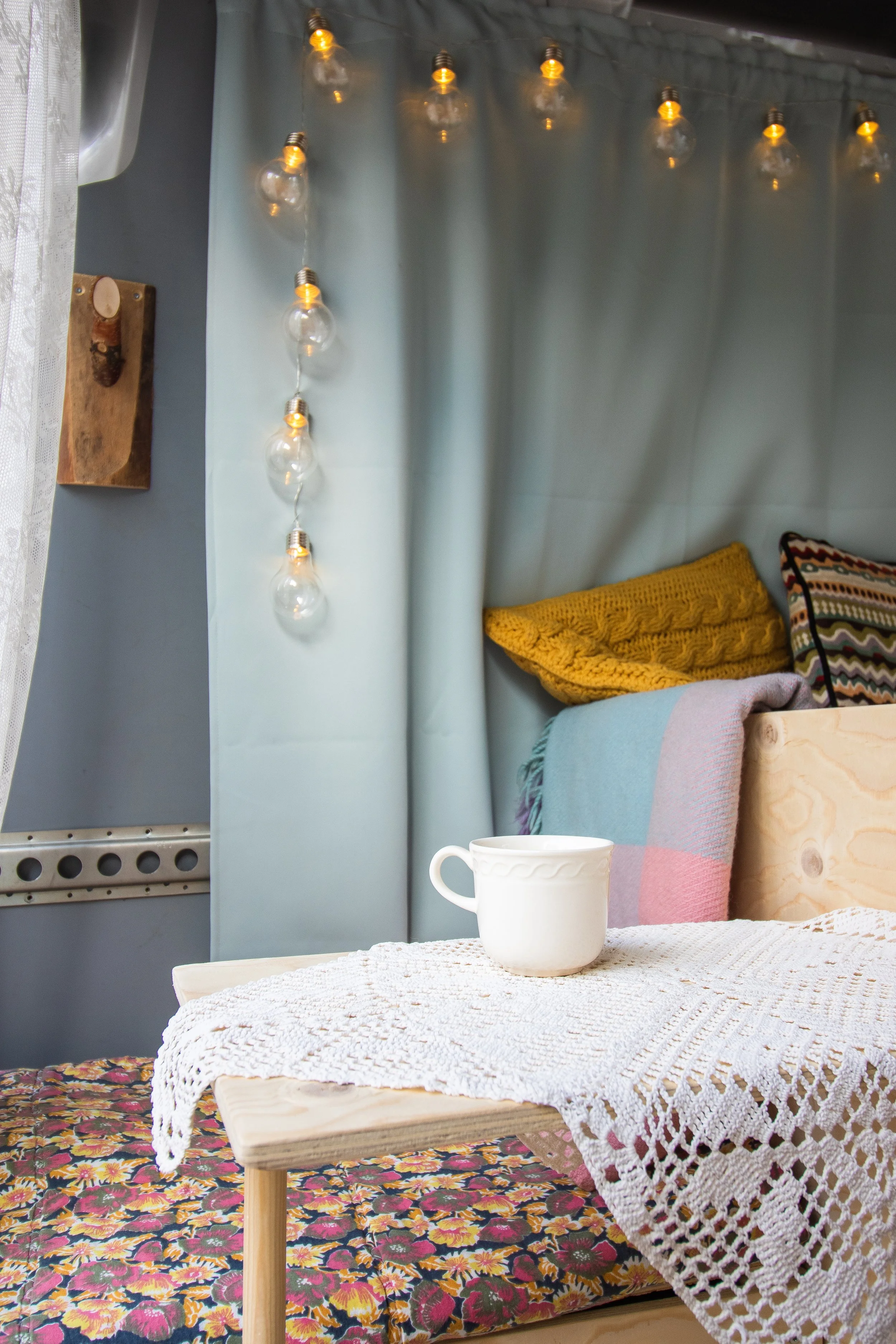
On the opposite wall of the kitchen, in the space between the bed and the rear doors, there was an empty spot that I initially couldn’t think of how to use. I considered filling it with various storage items, bags, and boxes, but towards the end of the project, I came up with a better idea. Since I’ll be working from the road throughout the summer—writing, editing photos, and, of course, eating—I needed some sort of table and bench. I’m not fond of eating and working from the bed, and a bench that opens for storage fit perfectly in this space. The table folds up against the headboard, its leg detaches, and I can secure it—surprise, surprise—with tie-down straps when I’m not using it.
If I may say so myself, this was my best idea for the project. It was worth a few scrapes and a long evening of work to enjoy breakfast at the table and be able to work with relatively good ergonomics from the van.
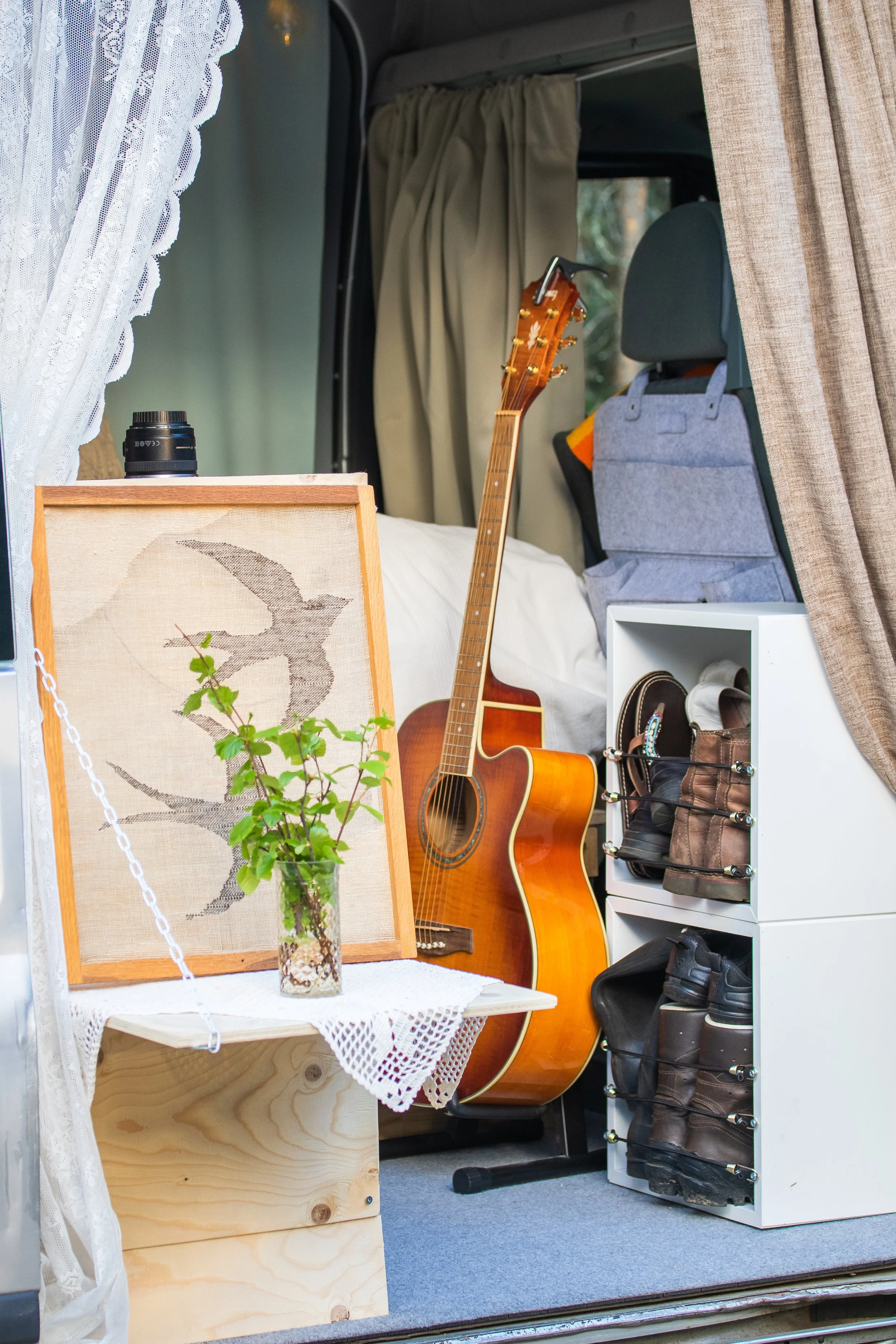
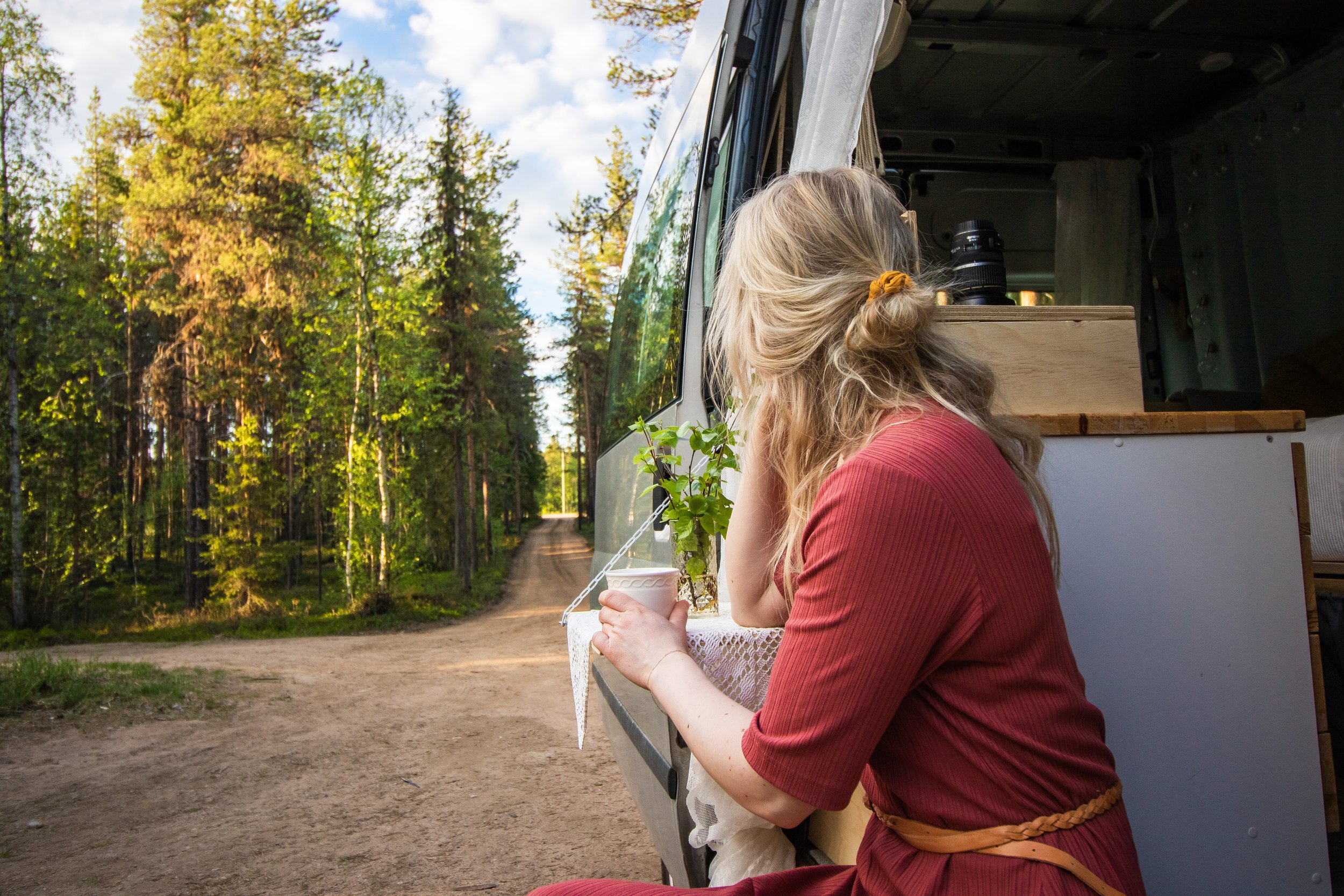
In the front of the van, I managed to fit my guitar (which, for now, isn’t secured yet; that’s still a problem to solve) and a shoe cabinet I made from IKEA boxes I found in the back storage area. Outside, on the other side of the water point, I built a similar hinged table that swings down like the one at the back of the van. It stays relatively secure with just the hinges, but I added a chain for extra support to prevent the hinges from breaking under the weight placed on the table. Here, I can cook meals on the Trangia when the weather is nice or gather wildflowers from the journey to place in a vase.
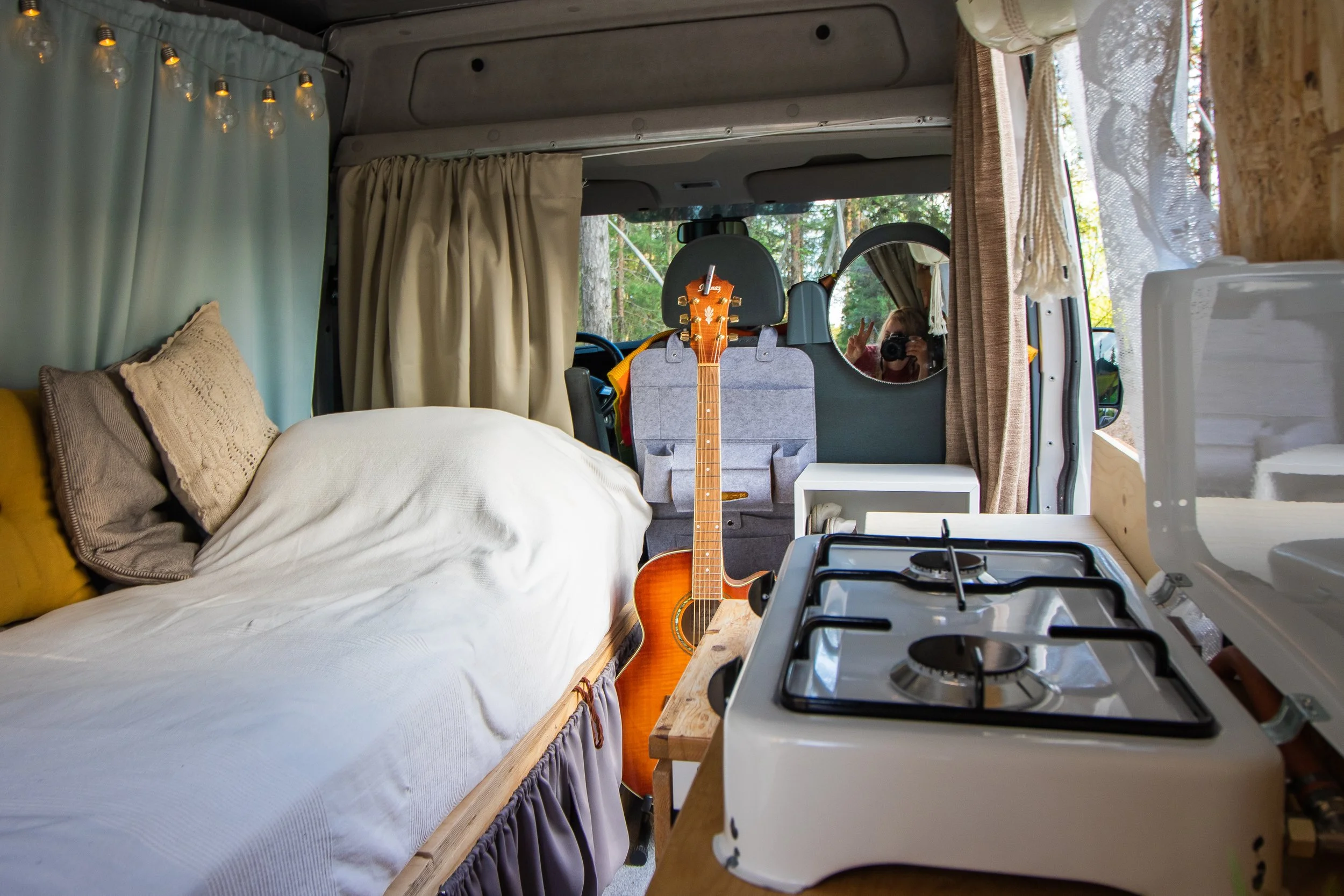
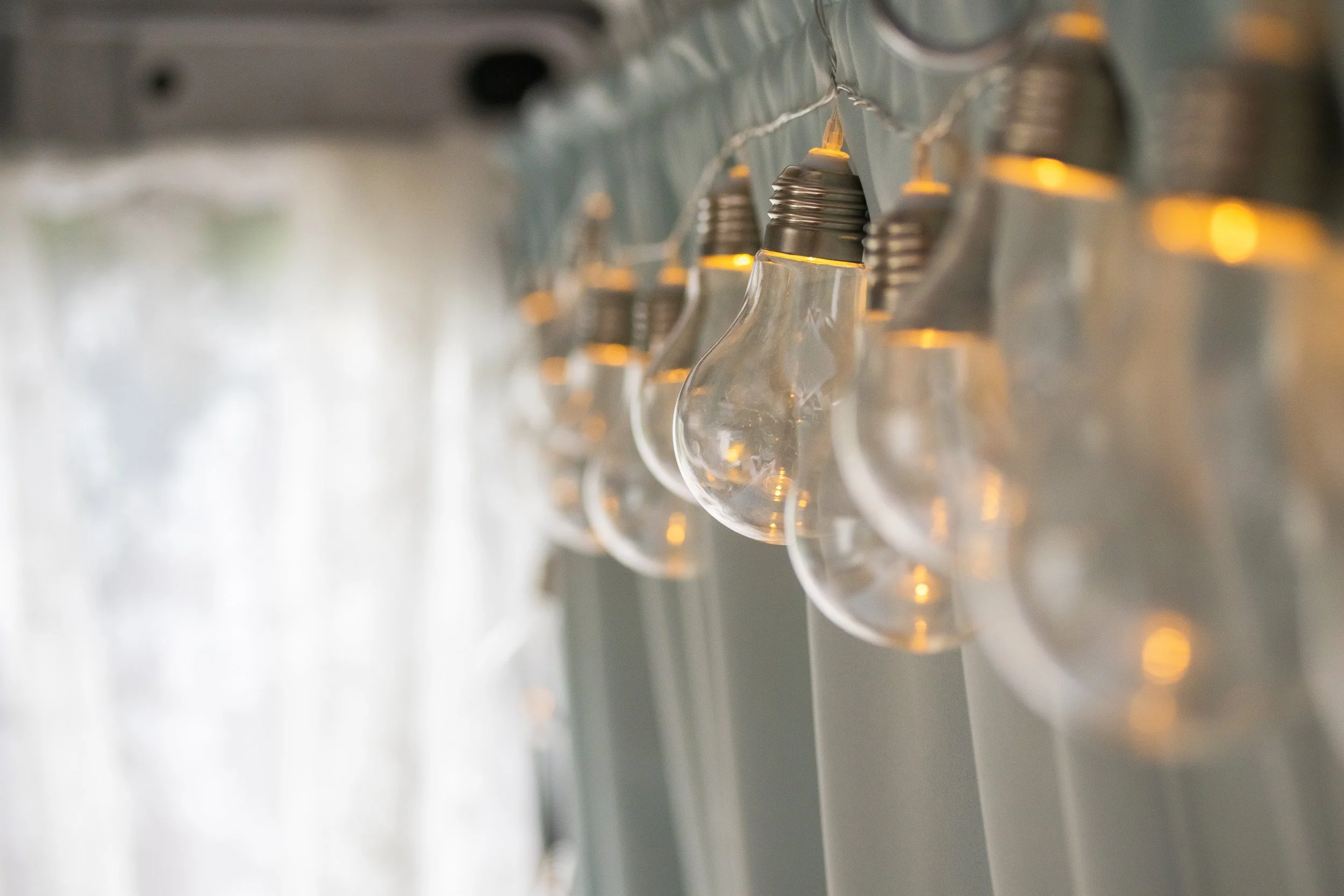
I added two string lights to the van that run on batteries. I could have connected the lights to the van’s electrical system, specifically the leisure battery, but this way was easier. I’m not sure how much use I’ll actually get out of the lights when the midnight sun shines all day throughout the summer, but they certainly create a nice and cozy atmosphere.
My goal and theme for this project was to avoid buying anything new. Aside from the gas stove, refrigerator, and one €30 piece of plywood (it was a big piece!), as well as electrical supplies, everything else is either from my own home or purchased second-hand. The end result is a bit eclectic and thrift-store-like, but that doesn’t bother me. I did this for myself, and I’m more than happy with it.
Adventure awaits, the road is open, and the magical summer of the north lies ahead. It’s wonderful to have you here with me to follow along with all of this 💛
Hugs,
Sanna
Just a reminder, I also frequently update my Instagram with videos and photos from my trip and adventures. You're welcome to join me there 🤗